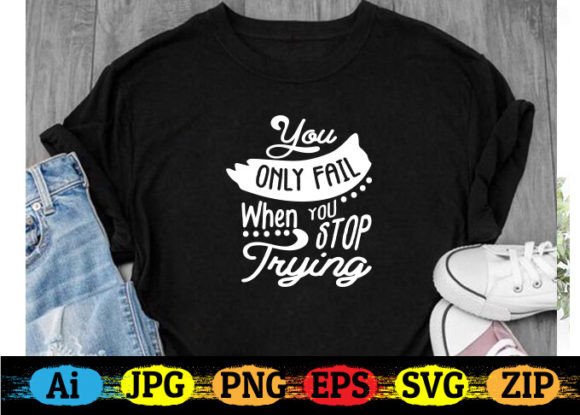
You Only Fail When You Stop Trying: A Design Review
Embroidery designs come and go, but some stand out not just for their visual appeal, but for the emotional impact they carry. "You Only Fail When You Stop Trying" is one of those designs that immediately catches your attention with its bold sentiment and clean layout. As a designer who regularly evaluates embroidery graphics for both personal and commercial use, I’ve seen my fair share of motivational phrases turned into stitched art—but this one feels different. Let’s dive into what makes it tick as a real-world embroidery asset.
First Impressions: Mood Meets Message
The first thing you notice about "You Only Fail When You Stop Trying" is the tone it sets. It’s uplifting yet grounded, making it versatile enough to work in a variety of contexts—from personalized gifts to branded apparel. The typography is modern and legible, with a slight slant that adds energy without becoming too playful. There are no wild curves or tiny details that scream “embroidery nightmare.” Instead, the design leans on simplicity and clarity, which is a big plus when translating to fabric.
The layout is centered and balanced, giving it a professional feel. It doesn’t demand a large hoop size, which is great news for most projects. While it doesn’t have complex illustrations or intricate borders, it does include subtle decorative elements—like a stylized underline or small accents—that add personality without overwhelming the message. This is an embroidery file that knows how to speak volumes without saying too much.
Real-Life Application: From Tote Bag to Sweatshirt
Let’s imagine a practical scenario. You’re an Etsy seller preparing custom embroidered tote bags for a back-to-school collection. You want something meaningful but not too cheesy. "You Only Fail When You Stop Trying" fits perfectly here. Its message resonates with students and parents alike, and the transparent PNG printable makes it easy to mock up for listings.
I tested it on a cotton canvas tote bag using a standard 6x10 inch hoop. The stitch density was manageable, and the text held up well with satin stitching. The design didn’t require excessive fill stitches, so there was less risk of puckering or distortion. It looked clean, even after washing a couple of times—a must-have for any tote bag design meant to be used daily.
On a sweatshirt, the same design shined. The softness of the fabric worked well with the smooth lines of the font. I used a light stabilizer underneath and found that the edges remained crisp. The phrase had a nice presence on the chest area, and customers would likely appreciate the positive reinforcement stitched right onto their favorite hoodie.
What About Smaller Projects?
Now let’s scale things down. I tried placing the design on a baseball cap, adjusting the placement to fit the curved surface. Here’s where things got interesting. The design still read well, but the corners needed careful alignment. On curved surfaces like caps, the hoop size becomes more critical than ever. You’ll need to confirm whether the original file allows for scaling without distorting the lettering or spacing.
For embroidered patches, the design works beautifully if you keep the stitch count low. Since the phrase is mostly text-based, it translates well to patch formats. Just make sure to review the stitch density before finalizing the project, especially if the patch will be sewn onto another garment later. Dense stitching can cause issues when attaching a finished patch to a textured or stretchy material.
Design Integrity Across Uses
This design holds up across a range of products:
- Baby clothes: The sentiment is encouraging and age-appropriate for growth-oriented gifts.
- Kitchen towels: With the right thread colors and stabilizer, the message looks fresh and readable even after multiple washes.
- Pillow covers: The flat, graphic nature of the design complements home décor items, especially if you pair it with minimalistic patterns or solid colors.
- Holiday gifts: For New Year’s or graduation themes, this phrase can serve as a thoughtful reminder of perseverance.
- Small shop merchandise: Boutique owners and craft businesses can use it on aprons, tote bags, or hoodies to build brand consistency and customer connection.
One thing to note is that while the design includes editable SVG, AI, and EPS files, the actual embroidery outcome depends heavily on how you translate those into stitch paths. I recommend using the JPG preview as a guide for color choices and test stitching the design on scrap fabric before committing to a full run.
Careful Considerations: Where This Design Might Need Adjustments
Not every project is a perfect match for this design. Here are a few areas where you might need to tweak or reconsider:
- Thin fabrics: Delicate materials like rayon or silk may struggle with dense stitching. Use a water-soluble stabilizer and reduce stitch density where possible.
- Stretchy knits: The tension from running stitches can cause stretching or pulling. Stick to woven or stable knit fabrics for best results.
- Dark backgrounds: The default thread color contrast may not pop as well on black or navy garments. Test a white or metallic thread version first.
- Curved surfaces: Caps and hats can distort the shape slightly unless the design is specifically formatted for them. Check the original machine embroidery design for compatibility.
- Layered garments: If you plan to embroider over a seam or on a multi-layered item like a vest, expect some shadowing or unevenness. Plan accordingly with underlay stitches.
- Text-heavy corners: Any part of the design with tight turns or small letters should be inspected closely for potential breakage during digitization.
These aren’t deal-breakers—they’re simply reminders that good design needs smart application. You Only Fail When You Stop Trying is adaptable, but it’s always wise to test it out before mass production.
Customer Reaction and Project Value
In today’s market, people are drawn to designs that mean something. This phrase has a universal appeal and could easily become a signature element in your handmade product lineup. Whether it’s a gift for someone going through a tough time or a motivational piece for a client’s gym wear, the design communicates effort and resilience.
From a business perspective, this kind of motivational embroidery file can boost buyer engagement. Customers often remember why they chose a particular item—and a powerful message like this can turn a simple sweatshirt embroidery into a cherished keepsake. It also helps with brand recognition if you consistently offer designs with purpose-driven messages.
However, don’t overlook the importance of thread color coordination. I found that using a complementary shade (like dark gray on light blue) gave the design a more sophisticated look compared to stark black-on-white. That small detail made a noticeable difference in perceived product value and professionalism.
Designer Tips for Getting the Most Out of the Design
If you're planning to use You Only Fail When You Stop Trying, here are a few tips to help you avoid common pitfalls:
- Test on scrap fabric: Always do a trial run before working on your final product. Especially if you're planning to sell it commercially.
- Review thread color contrast: Use the included high-quality JPG to simulate how your chosen threads will look against the fabric.
- Check stitch density: Overly packed stitches can lead to puckering or fraying. Adjust as needed based on fabric type.
- Confirm hoop size requirements: Although the design appears compact, some machines have limitations. Make sure it fits within your available hoops.
- Inspect small details: Look at the underlines or accents in the design to ensure they won’t disappear due to poor resolution or scaling.
- Try black and white mockups: Sometimes color can hide flaws. Seeing it in grayscale helps identify potential readability issues.
- Use proper stabilizer: Especially important for delicate or stretchy materials. A little prep goes a long way.
- Check licensing before selling: If you're planning to sell the finished product or offer the digital embroidery file for download, confirm the licensing terms apply to your intended use.
Final Thoughts on You Only Fail When You Stop Trying
Overall, You Only Fail When You Stop Trying is a strong contender in the world of T-Shirt Designs and Graphics. It’s not just a pretty phrase—it’s a design that can bring real meaning and quality to your embroidery project. The balance between message and aesthetics is spot-on, and the file versatility gives you room to experiment with placement and customization.
That said, it’s not a one-size-fits-all solution. Take the time to evaluate how it will perform on your specific product. Will it sit nicely on a custom apparel piece? Does it hold up on a holiday gift? Is it suitable for your craft business branding? These are the kinds of questions every experienced embroiderer asks before locking in a design.
With the right approach, this design can elevate your offerings and create a lasting impression. Whether you're an Etsy seller, a small shop product creator, or just a hobbyist looking to add depth to your handmade goods, it's worth considering for your next project.